
Your Scottish Wedding
7 Best Wedding Caterers in Scotland
The right wedding caterer makes hospitality feel generous while keeping the operation almost invisible. Food arrives at the correct temperature, dietary requirements are handled with care and service supports the speeches and evening rather than interrupting them.
These seven wedding caterers in Scotland cover formal wedding breakfasts, sharing dishes, grazing tables, live cooking and venues without conventional kitchens. Some can also provide bars, staff, equipment and event coordination, reducing the number of separate briefs you need to manage.
Send every caterer the same information: date, venue, guest numbers, dietary needs, timings and available facilities. Quotes become far easier to compare when they are built on an identical working brief.
The Lunchbox Boys
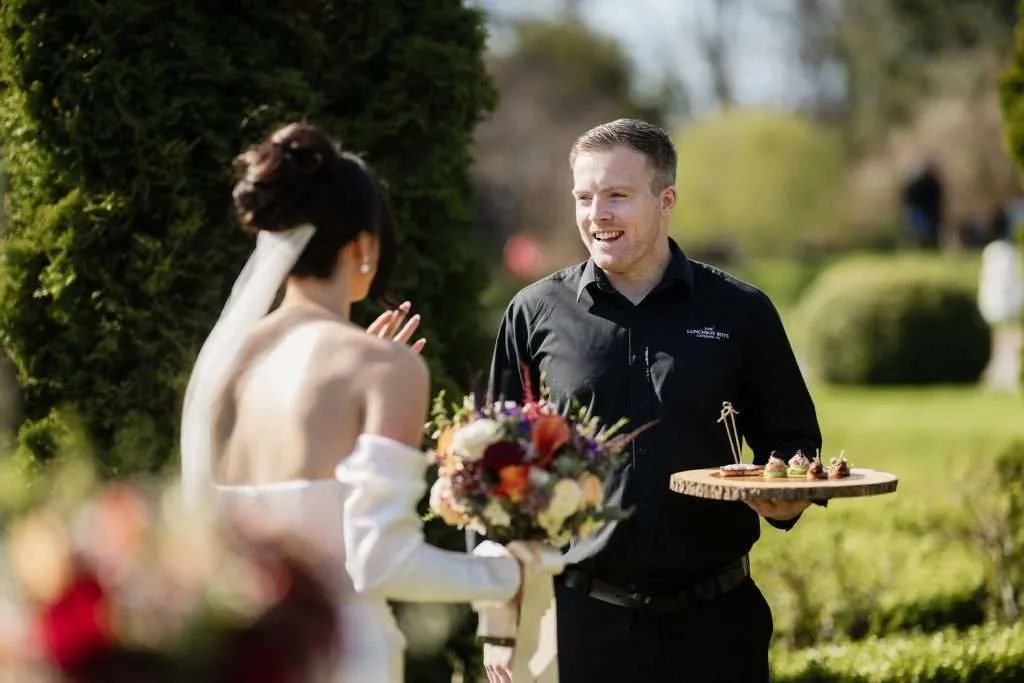
Food feels personal here, with the menu treated as part of the wedding's identity rather than a standard package. Couples can begin with the style of gathering they want and let the service format follow.
The Lunchbox Boys develops menus around the celebration rather than forcing every wedding into one fixed package. Grazing tables, multi-course dining and seasonal produce can all sit within the brief, with Scotland-wide work and published experience of celebrations from ten to 200 guests. The planning advantage is range: a country-house dinner and a relaxed gathering can receive different food while keeping the same attention to sourcing and service.
Jo's Kitchen
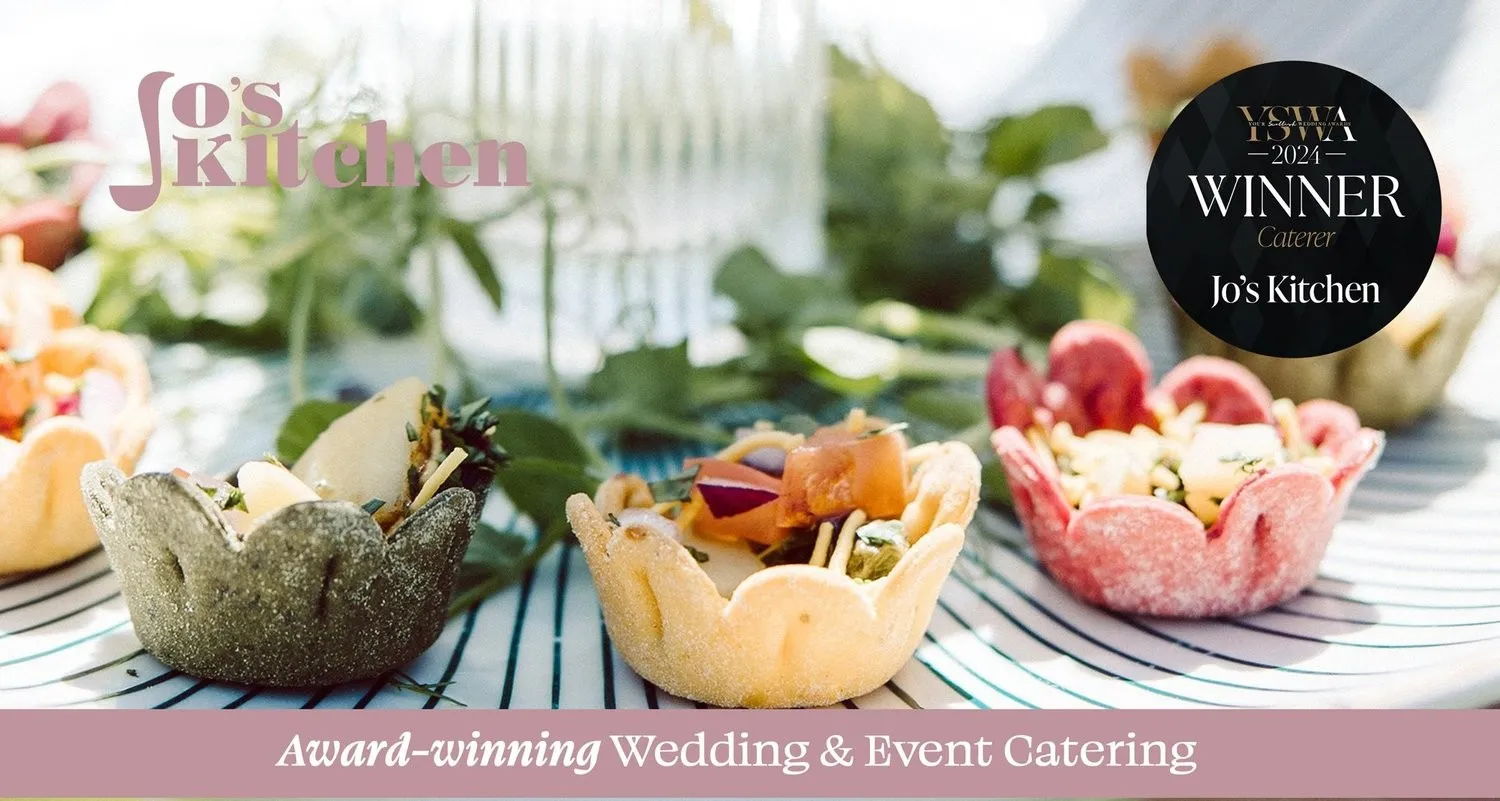
East Lothian-based Jo's Kitchen caters across Scotland and builds tailored menus around the people, venue and preferred style of service. Wedding breakfasts, buffets and barbecues are available, alongside vegetarian, vegan and other dietary adaptations. Experience in venues without a conventional kitchen, plus staffing and licensed drinks provision, makes the team particularly relevant to barns, marquees and private sites.
The useful distinction is operational confidence in unusual spaces. A tailored menu is supported by experience of creating a working service where the venue itself supplies little kitchen infrastructure.
The Edinburgh Catering Company

This is the broadest all-rounder in the edit, particularly for a wedding weekend or a dry-hire venue. One event team can coordinate more than the plate in front of each guest.
The Edinburgh Catering Company can coordinate food, staff, equipment, marquee hire and a stocked bar, with an event manager connecting the moving parts. Menus move between formal courses and generous sharing formats, and support can extend to rehearsal meals or a next-day brunch. This breadth is most useful when several food moments need to feel coherent across a wedding weekend.
Inside Out Catering Scotland

Inside Out Catering Scotland moves comfortably between restaurant-style plates, sharing food and street-food formats. Bespoke menus, Scottish produce, setup, staffing, coordination and a mobile bar can be combined according to the venue. It suits a wedding where hospitality changes character through the day but the couple wants one team to understand the full schedule.
A change of pace across the day is the attraction. Refined plates, informal food and bar service can sit within one hospitality plan rather than feeling like unrelated bookings.
Peck Catering

Peck's visual abundance and sociable service style suit drinks receptions, relaxed meals and next-day gatherings. It is a deliberate alternative to a fixed seated sequence.
Peck Catering is known for grazing tables layered with cheeses, charcuterie, breads, dips, fruit, vegetables and savouries. Glasgow-based service covers groups from eight to 200, with setup and display equipment included for grazing tables. The format supports conversation and movement, although the shared-kitchen allergen policy requires a careful discussion where a guest has a severe allergy.
Spitting Pig Scotland

Spitting Pig Scotland cooks on site, turning the main course into part of the outdoor atmosphere. Wedding menus can include canapés, salads, sides and desserts as well as a hog roast or alternative main, with vegetarian and gluten-free choices available. Shelter, access and serving space should be agreed with the venue so live cooking remains a strength in less predictable weather.
Live cooking supplies both food and atmosphere, making this a natural contender for a garden, marquee or rural wedding with a relaxed centre of gravity.
First Class Catering

Continuity and infrastructure distinguish the service. The menu, bar and practical hire elements can be discussed with one contact rather than divided between several businesses.
First Class Catering begins with menu planning and a tasting, then keeps one point of contact involved through the event. Scratch cooking can be presented as a formal meal or buffet, while a mobile bar and wider event details such as linen, decoration and dance-floor provision can be added. This is useful for a lightly equipped venue where infrastructure matters almost as much as the menu.
How to choose a wedding caterer in Scotland
Start with the experience rather than the dish names. Plated service creates clear moments for speeches. Sharing food softens the formality. Grazing and live cooking encourage movement. Decide which rhythm supports the rest of the day before refining individual courses.
Check staffing hours, crockery, glassware, linen, kitchen equipment, travel, waste removal and VAT. A lower food price can become the more expensive quote when operational essentials are added later.
Provide dietary requirements early and distinguish preferences, intolerances and severe allergies. Ask how dishes are prepared, identified and served, especially where a shared kitchen is used. The answer should be specific enough to let the affected guest judge the safeguards.
Use the tasting to assess portion, balance and service as well as flavour. Confirm the final menu, timings, inclusions, payment schedule and change process in writing, then allow the caterer and venue to coordinate directly.
Request a written service schedule with the menu. It should show staff arrival, kitchen setup, guest service and clearing. That document exposes timing conflicts early and gives the venue, planner and caterer one shared version of how the meal will operate.
Supplier meals and children's food need the same clarity as the main menu. Record quantity, serving time and location. A photographer eating after speeches or a band waiting for food can affect the rest of the evening schedule.
Ask what the quotation assumes about access. A caterer working from a permanent kitchen has a different task from a team building a temporary one in a marquee. Water, power, refrigeration, waste and the distance to tables can all alter staffing and equipment costs.
A tasting should test more than flavour. Notice the portion size, temperature and pace between courses, then discuss how those standards will be maintained for the full guest list. Record every agreed change in the revised menu rather than relying on notes from the meeting.
Dietary requirements belong in the design of the menu, not on a separate late list. Ask whether alternatives will look and feel comparable to the main dishes, how allergens are controlled and how serving staff will identify the correct guest discreetly.
Service style changes the atmosphere as much as the food. Plated courses create a clearer timetable, sharing dishes encourage conversation and food stations allow movement. Choose the format that supports the wedding you are planning, then confirm the staffing needed to make it work smoothly.
Evening food is most useful when it answers the shape of the day. Consider the time of the wedding breakfast, the number of evening guests and how long the bar remains open. A smaller, well-timed service can be more welcome than a large second meal.
Crockery, glassware, linen and serving equipment should appear as named items in the proposal. If they come from a separate hire company, establish who orders, receives, counts and returns them. Breakages, delivery windows and collection charges also need an owner.
Suppliers mentioned in this article
Find contact details and more information in the supplier profiles below.