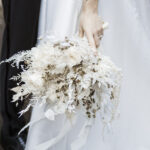
Seasonal stems – make your wedding more sustainable with seasonal flowers
- ThePlus Audio
Please click here to listen to this article
Did you know the carbon footprint of an average UK wedding is the equivalent of driving a car around the world twice?
That’s 14.5 tonnes of carbon dioxide!
However, from ditching paper invitations in favour of digital ones to choosing caterers who source local produce, there are lots of ways to make a difference.
And when it comes to picking your wedding flowers, seasonality can play an important part in keeping things sustainable – and hopefully affordable, too.
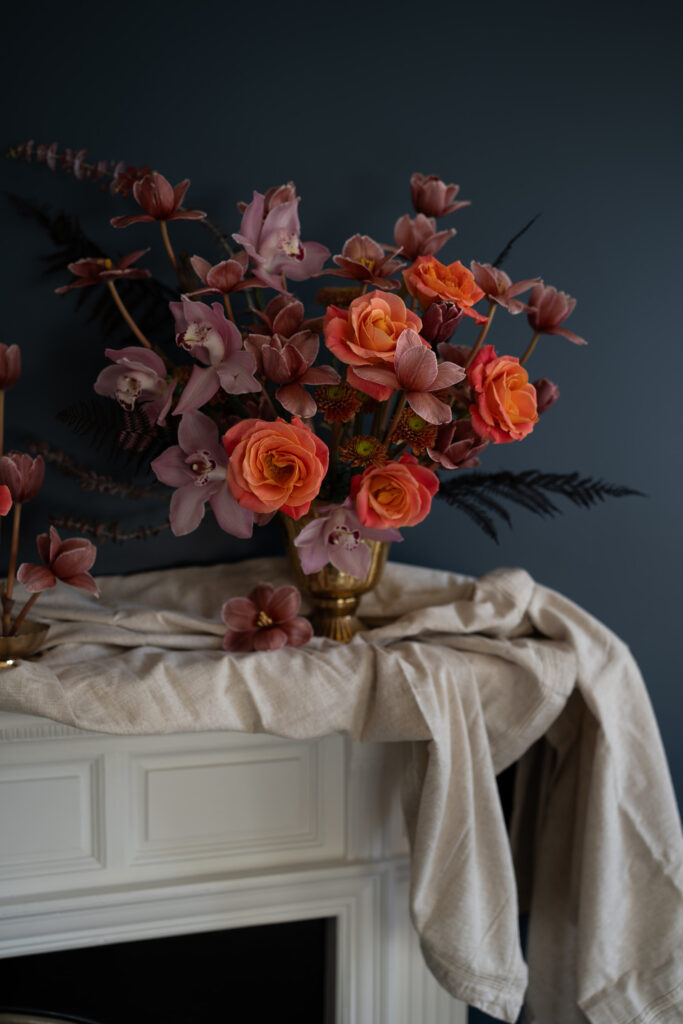
Carla Castagnola from Moss & Blossom Floral Studio uses high quality locally-sourced and homegrown flowers.
She explains, “Choosing seasonal flowers is a decision that will benefit the look of your wedding, the environment and your budget.
It’s definitely a win-win situation that, as wedding florists, we need to emphasise!
By opting for flowers that are naturally in season and locally grown you’re choosing the freshness of higher quality flowers, stronger and longer lasting stems and fuller more impactful blooms – all while supporting the local economy and sustainable practices.
Seasonal flowers are typically more affordable because of their abundance, but also because those flowers didn’t require all the additional costs involved in off-season growing or long distance transportation.”

Laura Jardine of Cherry Blossom agrees. “Trying to source flowers out of season can mean flowers travelling a long distance as they may need to be sourced further afield,” she explains.
“Using seasonal blooms reduces their carbon footprint.
“Overall, using seasonal flowers means the quality of the flowers and freshness will be at their height, therefore the flower head will be larger and will last longer.”
Helen Hardman of The Greenshed Flower Studio adds, “If you can source from local growers then this cuts down on air miles too – there has been a big focus on food miles in the media, but not much consideration for flower miles.
“A lot of imported flowers are grown in far flung places – Kenya, Columbia and Ecuador, for example.”
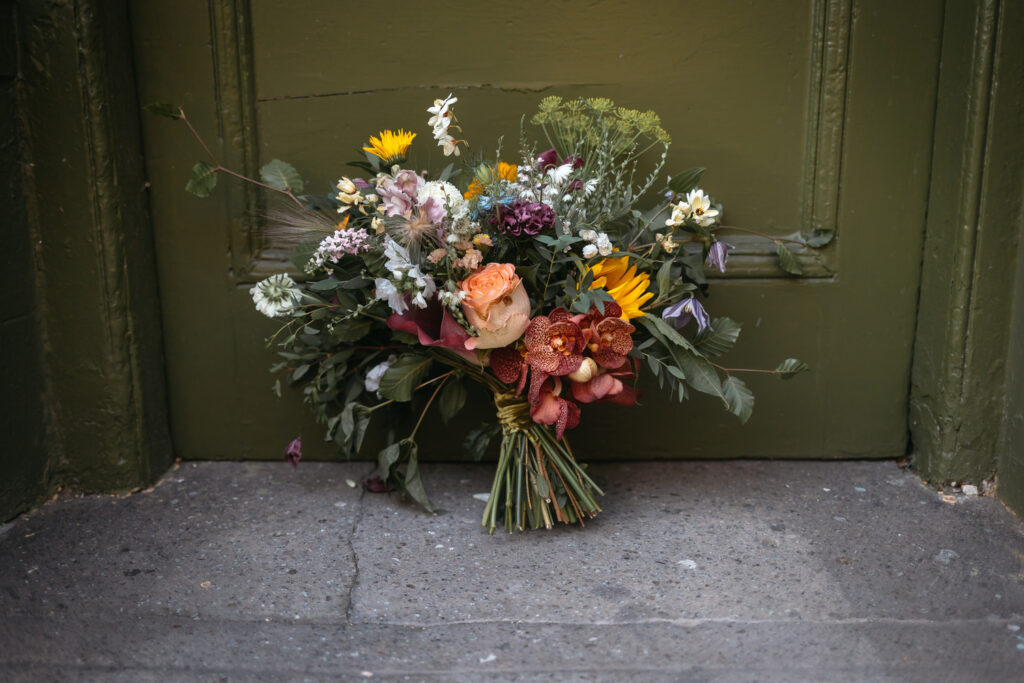
Multi-purpose designs
Louise Davies of Braw Blooms says cut flowers have a huge environmental impact and while the flower industry has a long way to go to reduce this, work is already being done to make a difference.
She suggests couples may wish to consider repurposing flowers from the ceremony for the reception.
“There are so many great options and this is something I encourage my couples to do as it means we create multi-purpose designs and therefore reduce the need for more flowers!”
She goes on, “Speak to our florist about how the flowers can be bundled up and given away after the big day so it’s not just one day they are being enjoyed for.”
Louise also says couples can consult their florist about using foam-free mechanics for arrangements, which is better than floral foam that’s harmful to the environment.

Changing seasons
Carla says each season brings its own magnificent selection of flowers, so try to be open to what’s available at the time of your wedding.
“I know that sometimes your heart is set on a particular flower, but I would recommend being open to being surprised by the blooms that are around on your wedding day.
“I think flowers mark a time, a specific season, and a special day!
“That’s the beauty of flowers.”
Helen says a couple’s decision on their choice of blooms will depend upon how particular they are about what flowers go into the bouquets and displays.
“Some people feel very sentimental about certain flowers – and rightly so, everyone has a favourite flower,” she says.
“If you know that spring flowers are your favourites, then try to book a date that will fit with that.
“Peonies are probably the most requested flower – their blousy bloom is the epitome of bridal romance for lots of people.”
She continues, “If you are a bit more relaxed about the flowers that will make up your bouquet and décor, then let your florist work within a general colour scheme or mood.
“They will be able to source flowers that will fit the bill and look their absolute best for you.”
Louise adds that by using seasonal flowers, you are choosing flowers that will be in their peak at that time.
“You’ll find that the colours are at their most vibrant, the blooms are at their biggest and most bountiful, the smells are typically so much more fragrant than imported flowers and that they are going to provide a beautifully natural feel to your day,” she says.
“Of course, your florist would love to help you have peonies any time of year but not only would that be really quite difficult, it also would mean a huge impact on both your budget and on the environment.”
And here’s a super-romantic bonus. Louise says, “Every year on your anniversary, you will have a flowery reminder of your day as you see those seasonal blooms bursting into life.
“You could even ask your florist to provide a bouquet every year as a lovely gift for your partner!”
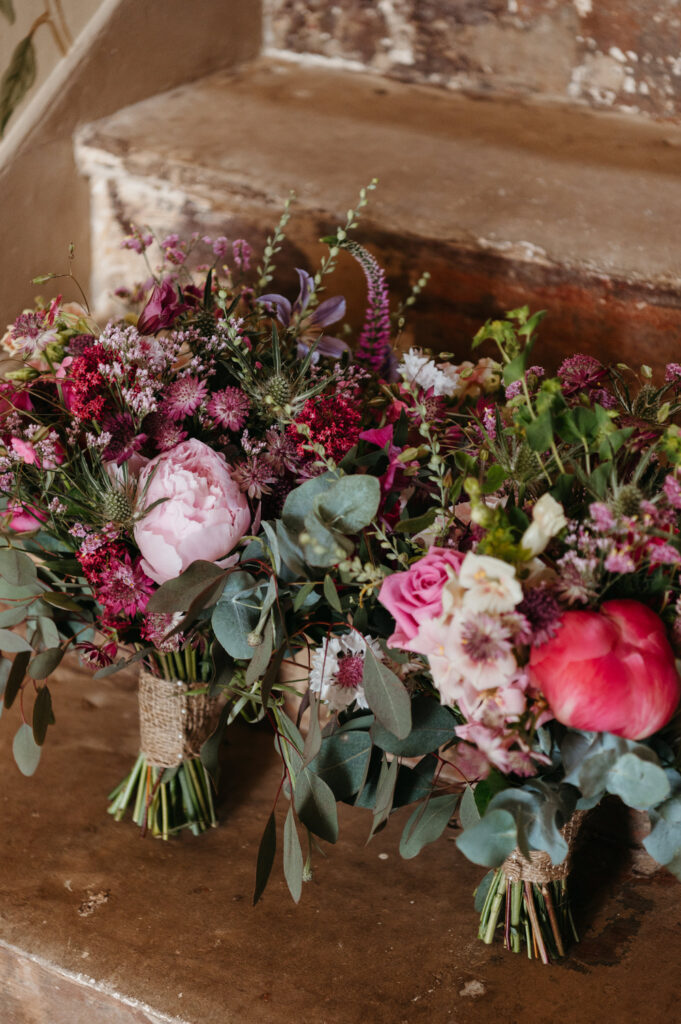
Helen says the start of the year presents some real floral gems, “Things like hellebores, ranunculus, anemone, tulip and narcissi – which has one of the most beautiful fragrances, in my opinion.
“Ranunculus are supremely fluffy and I am often asked if they are in fact a peony!
“So perfect if you love that big blousy look but it’s a little early in the season.
“I think tulips can be quite overlooked, but you can get some incredible varieties that will change how you view them.
“Early summer arrives with the sweet scent of lilacs on the trees, and peonies.
“One of my favourite flowers at this time of year is a corncockle – they are delicate yet have strong little trumpet-like flowers, and are great for adding some wildflower height popping out of your bouquet.
“High summer into autumn is the time of year with most floral availability – everything from focal flowers such as roses, snapdragons and dahlias, to ‘filler flowers’ like ammi and cosmos, which tend to be a little more bouncy and fluffy.
“Winter is harder for fresh flowers – but it’s also when British eucalyptus is at its absolute best.”
Louise adds, “For spring, flowers start to burst into life after those winter months and we will want to consider all the gorgeous choices including narcissus, tulips, anemones and ranunculus.
“Those peonies will also be starting to make an appearance towards the end of the season, as we head into summer.
“For summer, you really will have an abundance of seasonal flowers available – the types of stems include freesias, garden roses, dahlias, delphiniums, cosmos and zinnias.
“Autumn is another wonderful month for seasonal flowers as the cosmos and dahlias continue well into October but we also see things like chrysanthemums, sunflowers, amaranthus and rudbeckia.
“You may also start to see the addition of more textural elements including berries and bracken.
“For winter, I love when couples lean into the opportunity to focus on the excellent selection of wintery foliages and textural elements that we can use, that reflect this season so well.
“I should add that there are also still wonderful options flower-wise to use in the winter months, including hellebores or snowdrops.”
Something magical
Laura reminds us that some flowers will cross over into other seasons – depending on how harsh the weather has been.
“For example, this year the peony season started earlier and has finished earlier so it’s important to keep an open mind and be guided by your florist,” she says.
Carla says every flower has an amazing variety within its family.
“Double tulips that look like peonies, chrysanthemums that look like dahlias and ranunculus that fly like butterflies,” she says.
“When thinking of sunflowers, don’t stop at the big yellow flowers – think about delicate burgundy sunflowers with white and pink shades.
“Let your florist surprise you!”
And Helen adds, “My advice would be to trust your florist.
“We live and breathe flowers and will create something magical for you, no matter the season.
What’s in season when?
Spring:
Tulip
Ranunculus
Daffodils
Lila
Summer:
Peony (May/June)
Dahlia
Garden rose
Dunflower
Cosmos
Hydrangea
Clematic
Delphinium
Foxglove
Freesia
Autumn:
Rudbeckia
Chrysanthemum
Nerine
Cosmos
Anemone
Viburnum berries
Winter:
Hellebore
Snowdrop
Moss
Ranunculus
Anemone
Ever considered dried flowers?
Look out for our next feature on sustainable floral options coming to the website soon